


Automated, strategically timed sequences of personalized messages are what real estate drip campaigns are built on. They nurture leads, build relationships, and convert prospects into clients without requiring you to manually follow up with every contact in your database. The best campaigns combine email, SMS, and video into a coordinated multi-channel system that keeps you relevant from first inquiry to closing day. With email marketing ROI averaging $36 for every $1 spent in real estate, a well-built drip system is one of the highest-return activities in your business.
Here is what a modern drip campaign delivers:
- Automated sequences triggered by lead behavior, time intervals, or lifecycle stage
- Multi-channel reach across email, SMS, and video for deeper engagement
- Segmented messaging tailored to buyers, sellers, past clients, and cold leads
- Time savings by nurturing dozens of contacts simultaneously without manual effort
- Trust building through consistent, value-driven communication over weeks and months
Table of Contents
- Why real estate drip campaigns are non-negotiable for lead nurturing
- How to build an effective drip campaign step by step
- What types of drip campaigns should you be running?
- Tips to optimize your campaigns for better results
- How AI and automation are shaping drip campaigns in 2026
- Compliance and legal considerations in real estate email marketing
- Connecting your drip campaigns to your broader marketing channels
- The NAR REALTOR® Store supports your drip campaign success
- Key Takeaways
Why real estate drip campaigns are non-negotiable for lead nurturing
Most real estate leads take 6–18 months from first contact to transaction, but agents typically follow up actively for only 2–3 weeks before moving on. That gap is where deals disappear. Drip campaigns close it by maintaining consistent, relevant communication throughout the entire timeline, not just the first 2–3 weeks.
Consistent communication also builds credibility. When a prospect receives timely market updates, helpful buying guides, and personalized check-ins from you over several months, you become the trusted advisor they call when they are ready to act. That positioning is nearly impossible to achieve through sporadic, manual outreach.
The time savings are equally real. Automation lets you nurture hundreds of leads at once while you focus on active clients and appointments. You are not choosing between volume and quality; you are getting both.
Pro Tip: Follow the 80/20 rule for drip content: make 80% of your messages value-driven (market insights, buying tips, neighborhood data) and only 20% sales-oriented. This ratio keeps open rates healthy and unsubscribe rates low.
How to build an effective drip campaign step by step
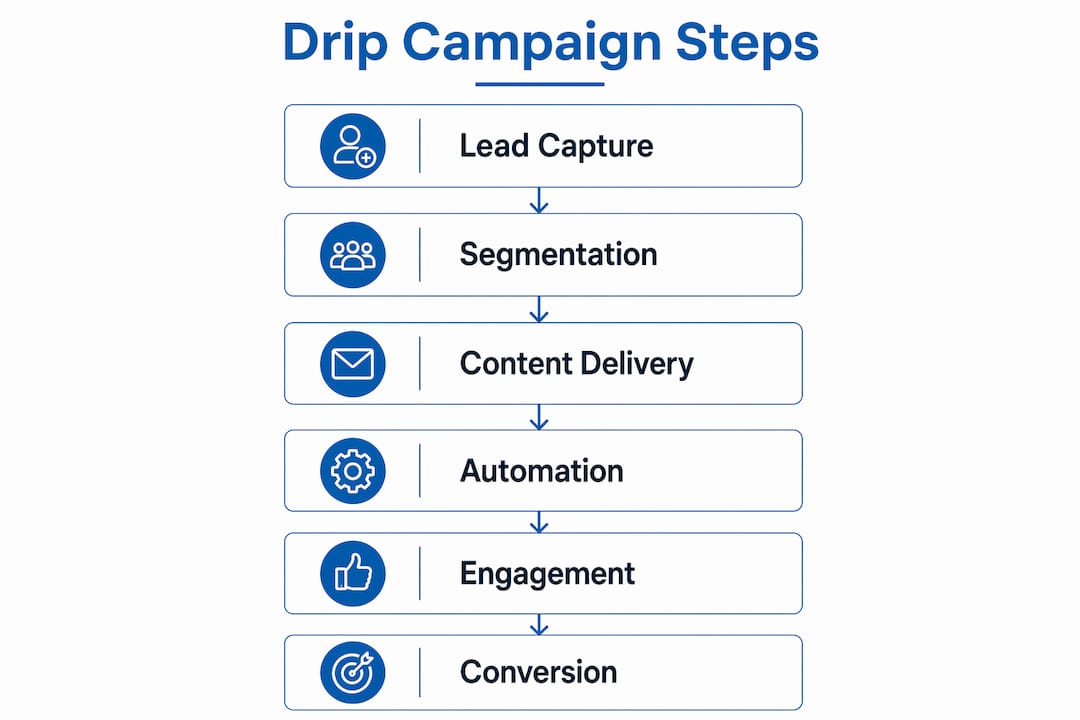
Building a drip campaign that actually converts requires more than dropping contacts into an email tool and hitting send. Follow this sequence to set yours up correctly from the start.
-
Capture leads and respond immediately. Connect your lead sources (website forms, Zillow, open house sign-ins) to your CRM so every new contact enters your workflow automatically. A personalized acknowledgment within 2 minutes of capture dramatically reduces lead loss. Reference the specific property or search criteria from the lead form so the message feels personal, not automated.
-
Segment your contacts before writing a single email. Group leads by buyer or seller status, timeline (ready now vs. 6+ months out), lead source, and behavior. Sending a first-time buyer the same sequence as a past client is a fast way to increase your unsubscribe rate.
-
Map your sequence with clear goals and a single CTA per email. Each email should have one purpose: ask a question, share a resource, or invite a conversation. Keep emails 100–200 words with one or two links for strongest engagement. A 10-email sequence over 60 days works well for buyer nurture; seller sequences often run 8 emails over 45 days.
-
Set up automation triggers in your CRM. Start sequences the moment a lead enters your system. Use behavioral triggers such as property saves, link clicks, or email opens to shift leads between active and maintenance sequences automatically.
-
Configure reply detection before you launch. This step is critical and often skipped. When a lead replies, the campaign must pause immediately. Continuing to send automated messages after someone has engaged looks robotic and damages trust.
-
Review performance monthly. Track open rates, reply rates, and appointment conversions. If open rates fall below 25%, test new subject lines. If reply rates are low, add more question-based emails to the sequence.
What types of drip campaigns should you be running?
Not every lead needs the same sequence. Here are the core campaign types every agent should have ready:
- Speed-to-lead buyer campaign. Designed for fresh online leads, this sequence focuses on immediate contact and qualification. The first message goes out within minutes of capture, followed by property matches and a buyer’s guide within the first 48 hours.
- Long-term nurture sequence. For leads who are 6–12 months from making a move, this campaign delivers consistent value through market updates, neighborhood insights, and educational content without any pressure to act.
- Past client and sphere of influence campaign. Your best source of referrals is your existing network. Home anniversary check-ins, market updates, and referral requests keep those relationships warm year-round.
- Cold lead re-engagement. Leads that have gone quiet respond well to a direct question or a compelling offer. A simple “Are you still looking?” text or a “breakup email” that uses the fear of losing contact often prompts a reply from leads you thought were gone.
- Post-closing referral campaign. The weeks immediately after closing are when excitement is highest. A short sequence requesting a five-star review and gently asking for referrals captures that momentum before it fades.
- Open house follow-up. Attendees who signed in at your open house are warm leads. A five-email sequence over 14–21 days converts many of them into active buyers before they forget the experience.
Tips to optimize your campaigns for better results
Strong campaigns are not set-and-forget systems. They require ongoing attention to stay effective. These practices separate high-performing sequences from ones that quietly collect dust in your CRM.
- Use merge tags for every message. Personalization goes beyond the first name. Pull in the lead’s preferred neighborhood, property type, or search criteria to make each email feel written specifically for them.
- Integrate SMS alongside email. Multi-channel sequences that combine email and text convert a higher percentage of new leads into active conversations than email alone. SMS works especially well for quick check-ins and time-sensitive updates.
- Keep subject lines short and curiosity-driven. Avoid spam trigger words. Question-based subject lines consistently outperform declarative ones for real estate audiences.
- Incorporate social proof. A brief mention of a recent client win, a neighborhood sale, or a testimonial link builds credibility without sounding boastful.
- Include timely market data. A weekly or monthly market snapshot for the lead’s target area demonstrates that you have your finger on the pulse of local conditions. It also gives you a reason to reach out that feels genuinely useful.
- Avoid emailing too frequently. Space messages every 3–5 days during active engagement, then taper to monthly for long-term nurture. Overloading a lead’s inbox is the fastest way to earn an unsubscribe.
Pro Tip: Configure reply detection to pause or remove a contact from the sequence the moment they respond. Failing to do this is the single most common mistake agents make, and it signals to the lead that no one is actually reading their replies.
How AI and automation are shaping drip campaigns in 2026
The gap between agents using basic email sequences and those using AI-powered automation is widening fast. In 2026, the most effective campaigns are not just automated; they are adaptive.
AI-powered segmentation tools now analyze a lead’s online behavior, including which listings they viewed, how long they spent on each page, and what search filters they used, to automatically place them in the most relevant sequence. That means a lead who saves three condos under $400,000 gets different content than one who keeps browsing four-bedroom single-family homes, without any manual sorting on your part.

Predictive analytics within modern CRMs identify buying signals before a lead reaches out directly. When a contact who has been quiet for months suddenly opens three emails in seven days or saves a listing, that behavioral trigger should immediately alert you and shift the lead back into active engagement mode. You get a notification with the lead’s full history and recent activity so you can call with context, not a cold opener.
AI-optimized send times are another practical gain. Rather than blasting your list at 9 AM on Tuesday, the system analyzes each contact’s engagement patterns and delivers messages when that specific person is most likely to open. Timing optimization at the individual level can significantly increase open rates.
Inactive leads should never be deleted. Long-term drip sequences that shift dormant contacts to a monthly low-pressure cadence keep the relationship alive at minimal cost. Many agents have converted leads that sat in monthly drip for 18–24 months.
Pro Tip: Set a lead-scoring threshold in your CRM so that contacts crossing a defined engagement score automatically move from long-term drip back into active outreach. You focus your energy on the leads already raising their hands.
Compliance and legal considerations in real estate email marketing
Every drip campaign you run must comply with the CAN-SPAM Act, which governs commercial email in the United States. The rules are straightforward but non-negotiable. Every email must include your physical mailing address, a clear and honest subject line, and a working unsubscribe mechanism that processes opt-out requests within 10 business days.
SMS campaigns carry additional requirements under the Telephone Consumer Protection Act (TCPA). You must obtain explicit written consent before sending automated text messages to a contact. Purchasing a lead list and immediately enrolling those numbers in an SMS sequence without consent is a TCPA violation that carries real financial penalties.
Beyond federal law, the NAR Code of Ethics reinforces the expectation that your communications are honest, transparent, and respectful of a prospect’s time and preferences. Honor unsubscribe requests immediately, never use deceptive subject lines, and always identify yourself clearly in every message. Compliance is not just a legal obligation; it is a direct expression of the integrity that defines the REALTOR® standard.
Connecting your drip campaigns to your broader marketing channels
A drip campaign that operates in isolation leaves conversion opportunities on the table. The most effective agents treat email and SMS sequences as one layer of a coordinated marketing system.
Social media and drip campaigns reinforce each other naturally. When a lead receives a market update email from you and then sees your post about the same neighborhood trend on Instagram, your authority compounds. You can use retargeting ads on Facebook and Instagram to stay visible to contacts who are already in your email sequences, creating multiple touchpoints without additional manual effort.

Direct mail still earns a place in a multi-channel approach, particularly for seller leads and sphere of influence campaigns. A postcard or handwritten note timed to arrive around the same day as an email creates a memorable impression that purely digital outreach cannot replicate.
Video is the channel most agents underuse. A 30-second personalized video embedded in an early email puts a face to your name before you have ever spoken on the phone. Platforms that support video email let you record once and send to many while still feeling one-to-one. Combining email for depth, SMS for immediacy, and video for human connection gives your multi-channel sequences the best chance of converting a cold lead into a conversation.
The NAR REALTOR® Store supports your drip campaign success
Building drip campaigns that actually convert requires more than the right software. It requires the right knowledge, the right content, and the right professional foundation. That is where the NAR REALTOR® Store delivers something no generic marketing platform can match.
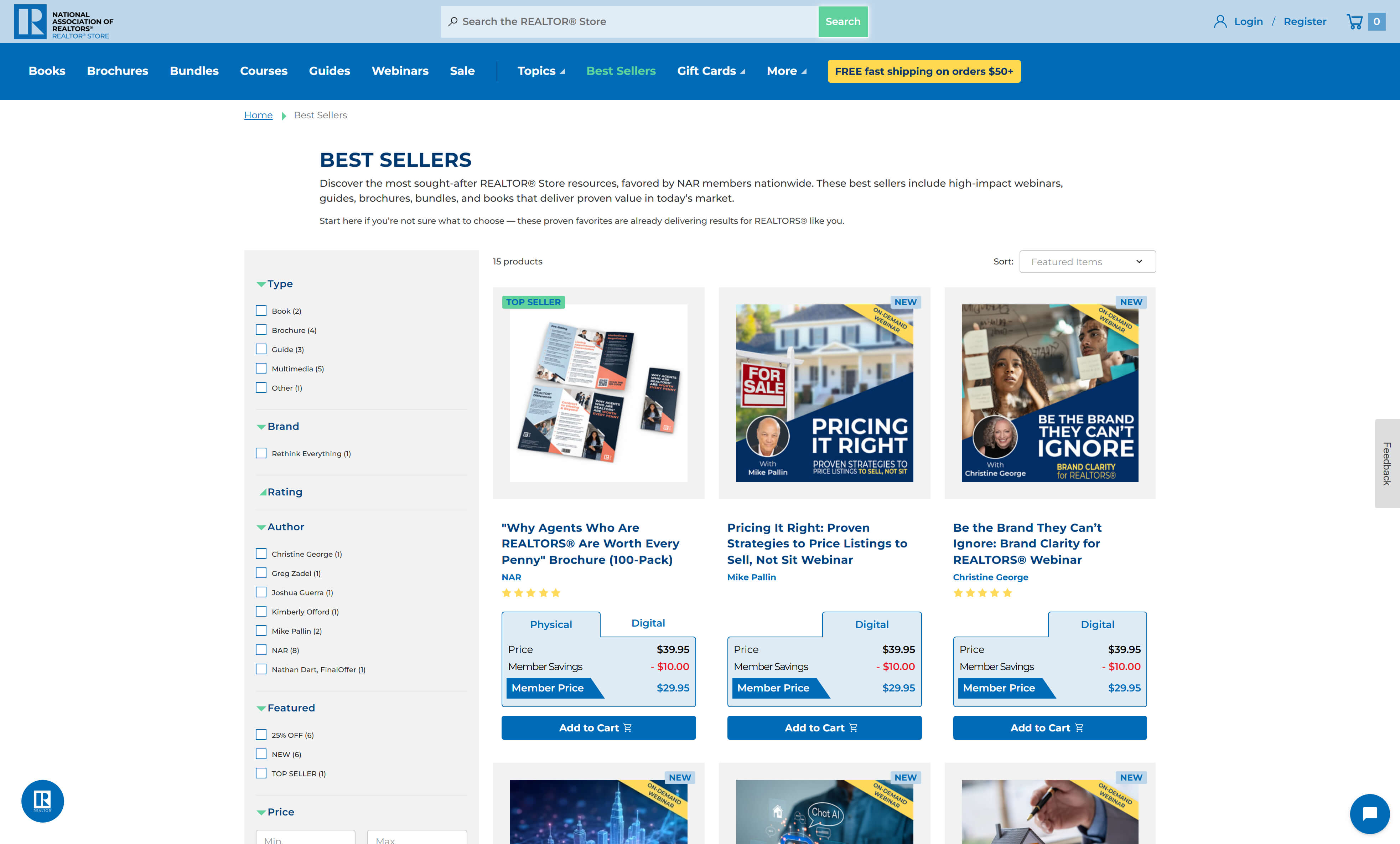
The Store gives you direct access to NAR-vetted guides, marketing books, brochures, and professional development courses built specifically for REALTORS®. Whether you need content ideas for your nurture sequences, a buyer’s guide to attach to your welcome email, or a course on real estate marketing automation to sharpen your strategy, the Store has resources designed for your practice. These are not generic templates; they are materials grounded in industry expertise and aligned with the ethical standards your clients expect from a REALTOR®.
Visit store.realtor to browse the full catalog of marketing resources, books, and professional development tools that help you build campaigns worth sending.
Key Takeaways
Real estate drip campaigns work best when they combine multi-channel automation, behavioral triggers, and value-driven content to maintain consistent contact across a 6–18 month lead timeline.
| Point | Details |
|---|---|
| Respond within 2 minutes | A personalized acknowledgment within 2 minutes of lead capture dramatically reduces lead loss. |
| Follow the 80/20 content rule | Keep 80% of messages value-driven and 20% sales-focused to maintain trust and reduce unsubscribes. |
| Configure reply detection | Pause sequences immediately when a lead replies to avoid robotic follow-ups that damage relationships. |
| Use behavioral triggers | Engagement spikes like 3+ email opens in 7 days should automatically alert you and shift leads to active outreach. |
| NAR REALTOR® Store resources | The Store provides NAR-vetted marketing guides, buyer resources, and courses to fuel your drip campaign content. |
